
Damage control resuscitation and massive transfusion
Sep 07, 2026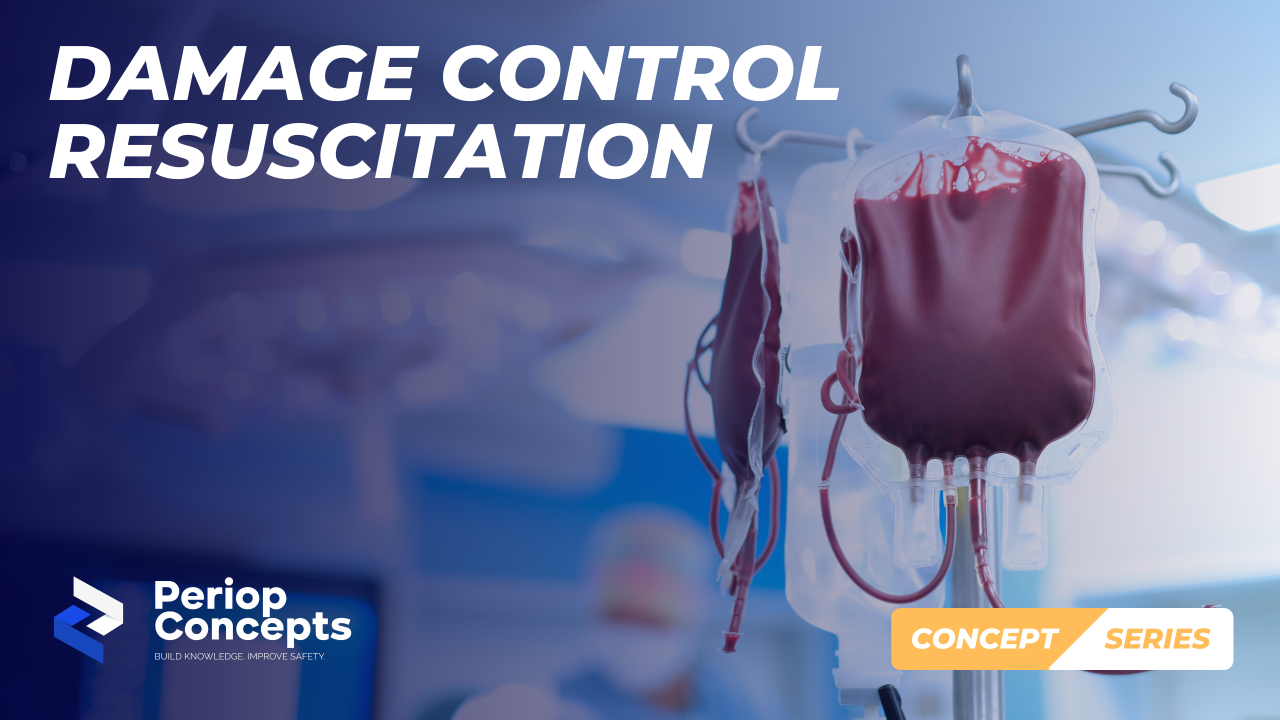
When major haemorrhage occurs, the priority is not simply to replace the blood that has been lost. Damage control resuscitation (DCR) is a coordinated approach designed to limit ongoing blood loss while preventing the physiological spiral of coagulopathy, hypothermia, acidosis and hypocalcaemia.
For the perianaesthesia nurse, this means recognising that resuscitation and haemorrhage control are happening together. There may be little time to correct every abnormality before the patient reaches theatre, so early recognition, preparation and close monitoring become particularly important.
Massive transfusion protocols support this approach by providing rapid, balanced blood product resuscitation. A 1:1:1 strategy using plasma, platelets and red blood cells has been associated with improved haemostasis and fewer early deaths from exsanguination compared with a 1:1:2 strategy. Importantly, delays in activating the massive transfusion protocol can also affect outcomes.
🔴 Think early about ongoing haemorrhage and the potential need for massive transfusion.
🩸 Balanced blood product administration helps address both oxygen-carrying capacity and coagulation deficits.
🌡️ Prevent hypothermia, as temperatures below 36°C are associated with increased blood product requirements and mortality.
🧪 Monitor coagulation, acid-base status and ionised calcium, recognising that hypocalcaemia can accompany large-volume transfusion.
💉 Minimise unnecessary crystalloid where appropriate, as excessive crystalloid can contribute to dilutional coagulopathy and other complications.
The perianaesthesia environment is often where these principles come together. Blood products need to be available, warming strategies considered, monitoring maintained and communication kept clear as the patient's condition evolves.
Clinical takeaway: Damage control resuscitation is about buying time while protecting physiology. In massive haemorrhage, rapid balanced transfusion, haemorrhage control, temperature management and ongoing assessment all work together to give the patient the best chance of reaching definitive treatment.
Build Knowledge ✅
Improve Safety ✅
References
LaGrone, L.N. et al. (2024). American Association for the Surgery of Trauma/American College of Surgeons Committee on Trauma: Clinical protocol for damage-control resuscitation for the adult trauma patient. Journal of Trauma and Acute Care Surgery, 96, 510–520.
Leibner, E., Andreae, M., Galvagno Jr, S.M. and Scalea, T. (2020). Damage control resuscitation. Clinical and Experimental Emergency Medicine, 7(1), 5–13.
Stay connected with news and updates!
Join our mailing list to receive the latest news and updates from our team.
Don't worry, your information will not be shared.
We hate SPAM. We will never sell your information, for any reason.

