
Distractions, Interruptions and Crisis Leadership in theatre
Oct 12, 2026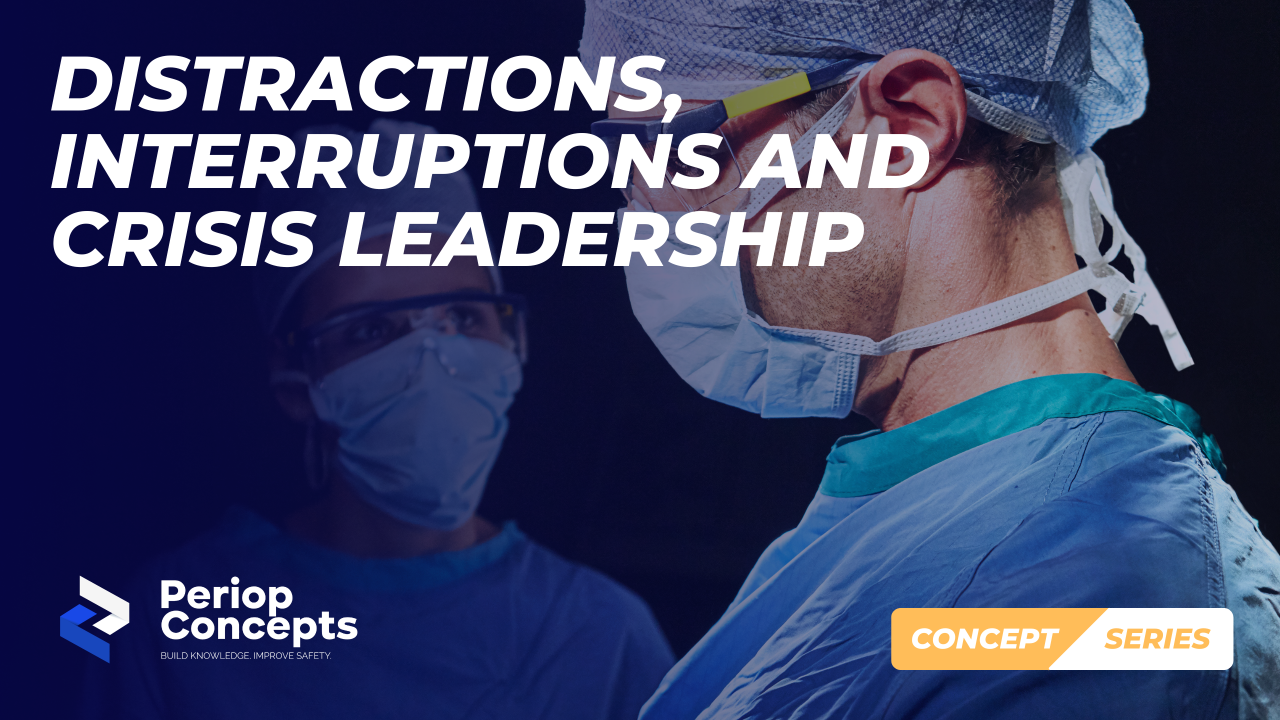
Anyone who has stood at the head of the table during a difficult induction, or has scrubbed in for a time critical or difficult surgery, knows how quickly the environment can shift. A pager sounds, someone asks an unrelated question, a door opens, and suddenly attention is pulled in several directions at once. For perioperative nurses, understanding how distractions and interruptions affect performance is central to keeping patients safe.
Research tells us that interruptions are extremely common in clinical settings and occur roughly every couple of minutes during procedural work. Not every interruption is harmful, some carry essential clinical information, but many simply add cognitive load at the worst possible moment. The real risk comes when a distraction coincides with a high stakes task, like airway management, drug administration, uncontrolled bleeding or a developing crisis.
🔹 Interruptions are frequent and often unavoidable in theatre
🔹 Equipment issues and irrelevant conversation are common sources
🔹 Novices and those under cognitive load are more vulnerable to disruption
🔹 Critical phases of anaesthesia and surgery deserve deliberate protection from noise
For the perioperative nurse, this means actively protecting critical moments. During induction, surgery, emergence and any evolving crisis, minimising non-essential conversation and controlling who enters the physical space supports the anaesthetist's and surgeon's focus. Acting as a calm second set of eyes, closing the loop on communication and speaking up early when something feels off are all part of genuine crisis leadership, not just technical skill.
Being aware of your own attention, and gently guarding the attention of others, is one of the quiet but powerful ways perioperative nurses contribute to safer outcomes every single day.
Build Knowledge ✅
Improve Safety ✅
References:
Rivera, A.J. and Karsh, B.T. (2010). Interruptions and Distractions in Healthcare: Review and Reappraisal. Quality and Safety in Health Care, 19(4), pp.304-312.
Persoon, M.C., Broos, H.J.H.P., Witjes, J.A., Hendrikx, A.J.M. and Scherpbier, A.J.J.M. (2011). The effect of distractions in the operating room during endourological procedures. Surgical Endoscopy, 25(2), pp.437-443.
Stay connected with news and updates!
Join our mailing list to receive the latest news and updates from our team.
Don't worry, your information will not be shared.
We hate SPAM. We will never sell your information, for any reason.

