Fracture Fixation Fundamentals
Jan 08, 2026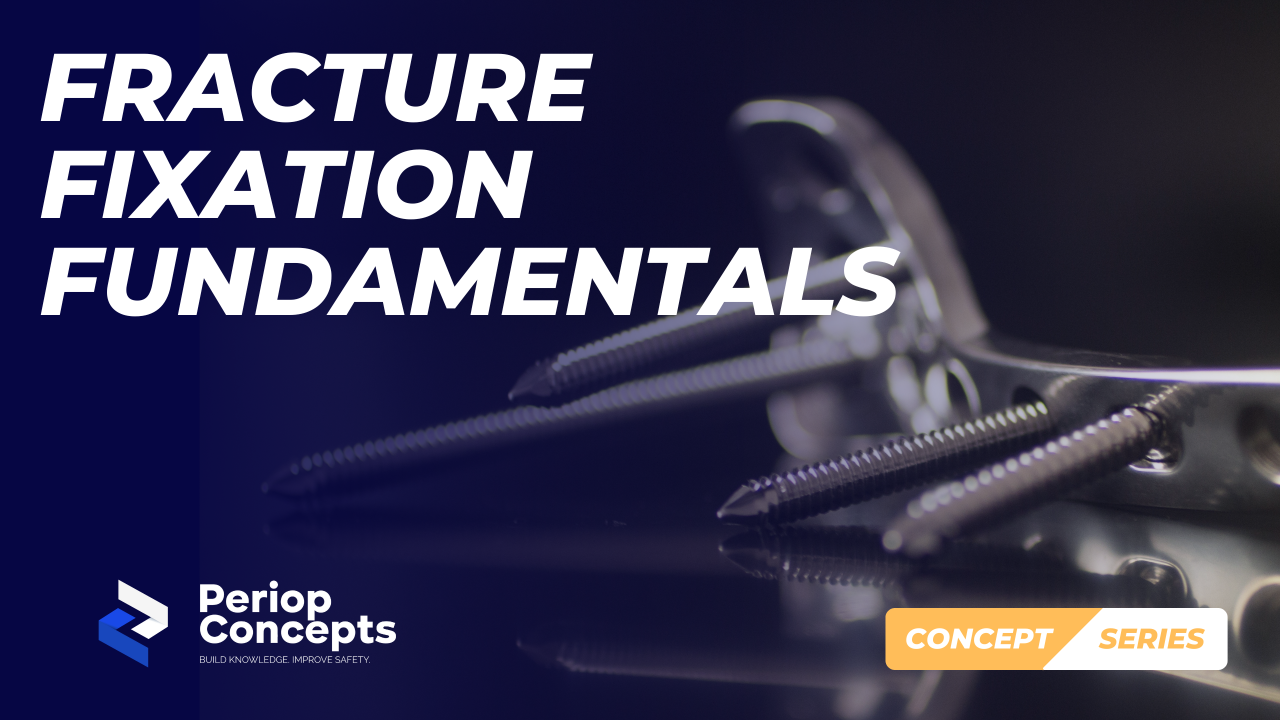
Fractures are more than a broken bone. 🦴
They sit within a living system that includes soft tissue, blood supply and the patient’s ability to move and heal. Understanding the basic principles of fracture management helps bring clarity to what can otherwise feel complex in trauma care, especially in the perioperative setting.
Bone healing relies on stability and biology working together. Internal fixation aims to hold fracture fragments in a way that supports healing while respecting the surrounding tissues. How much movement is allowed at the fracture site matters. Some fractures benefit from rigid fixation with no motion, while others heal better with controlled movement that encourages callus formation.
Key principles guide every fixation decision:
🦴 Accurate reduction to restore length, alignment and rotation
🦴 Stable fixation matched to the fracture pattern
🩸 Preservation of blood supply through gentle tissue handling
🖐️ Respect for surrounding soft tissues at every stage
🏃 Early, safe mobilisation to support function and recovery
Internal fixation devices such as plates, screws and intramedullary nails are chosen based on fracture location, bone quality and the type of stability required. Absolute stability supports direct bone healing and is often used for simple fracture patterns. Relative stability allows small amounts of movement, encouraging indirect healing in more complex injuries.
For perioperative nurses, these principles help explain intraoperative priorities and post-operative instructions around positioning, limb support and pain expectations. Fixation stability influences movement orders and weight-bearing status, while soft tissue preservation shapes careful handling and ongoing assessment.
A strong grasp of fracture management principles builds confidence. When stability and biology are respected, healing is supported, complications are reduced and patients are better positioned for recovery.
Developed and reviewed by a Periop Concepts educator, with artificial intelligence used to support formatting and layout.
References
Orthopaedic Trauma Association. (2018). Basic Principles and Techniques of Internal Fixation of Fractures. OTA.
Stay connected with news and updates!
Join our mailing list to receive the latest news and updates from our team.
Don't worry, your information will not be shared.
We hate SPAM. We will never sell your information, for any reason.