
CICO Simulation and Rehearsal: The nurse’s role in training the team
Jan 26, 2026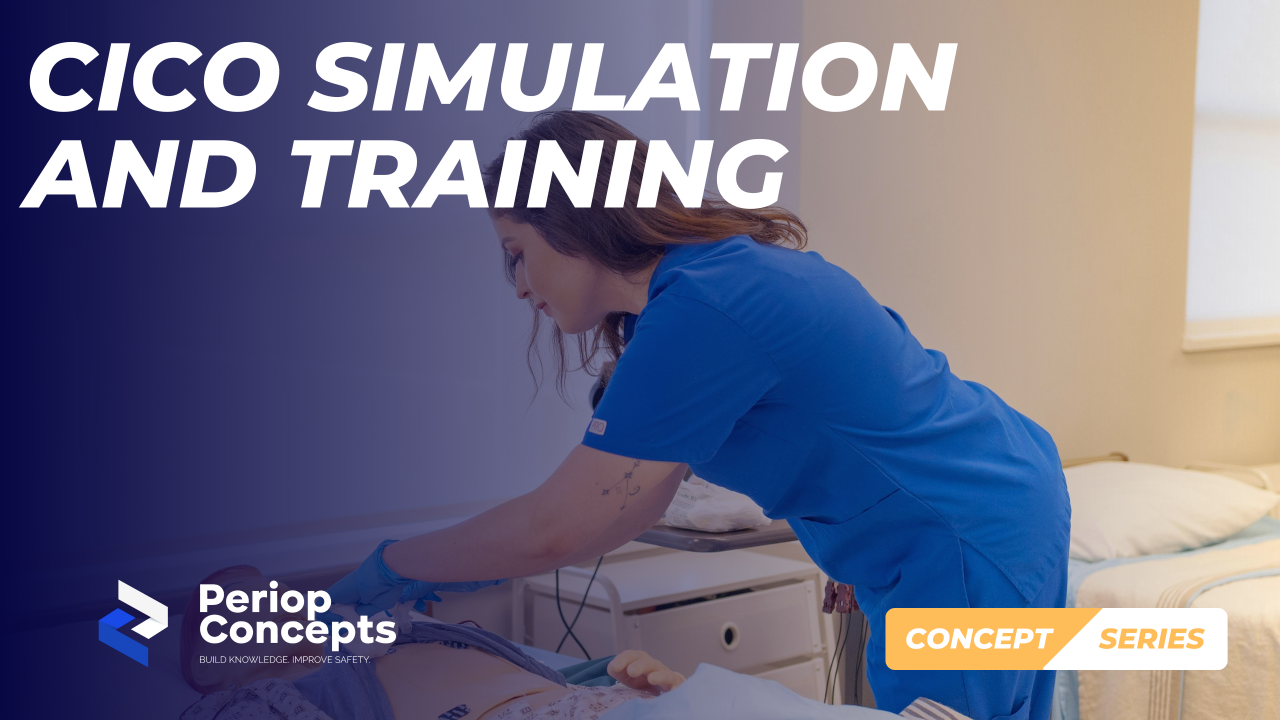
Simulation and rehearsal for Can’t Intubate, Can’t Oxygenate (CICO) crises are powerful tools that bring rare but life-critical airway emergencies into controlled practice environments. These structured activities give teams the opportunity to refine technical skills, practise decision making under pressure, and improve communication and coordination before a real crisis occurs. Research shows that immersive, team-based simulation enhances both technical and non-technical abilities in managing CICO scenarios, including faster call-for-help times, better adherence to protocols, and improved situational awareness.
What simulation and rehearsal mean
Simulation refers to replicating realistic clinical scenarios using mannequins and clinical environments so teams can practise responses safely. Rehearsal extends this by integrating systematic role play of protocols and team behaviours that mirror real life. Together, they help teams internalise actions, recognise early signs of escalation, and make timely transitions to rescue techniques like front-of-neck access.
Key points nurses bring to CICO training
- 🧠 Cognitive support: nurses help anticipate crisis progression, cue escalation criteria and monitor physiological changes.
- 🗣️ Team coordination: nurses model and practise effective communication strategies and closed-loop communication.
- 📋 Protocol adherence: nurses help ensure that algorithm steps are followed and documented during scenarios.
- 🔄 Debriefing leadership: nurses often lead debriefs that focus on team dynamics, decision points and learning outcomes.
Practical implications
By actively participating in simulation design and delivery, nurses not only practise their own skills but also influence how the team functions under stress. Nurse-led facilitation and debriefing strengthen team cohesion, clarify roles, and reinforce the principles of crisis resource management.
Clinical insight
Integrating nurses as co-designers and facilitators in CICO simulation transforms training from a technical exercise into a team learning experience. This collaborative approach improves confidence, reduces fixations on single strategies, and fosters adaptive, timely decision making when real CICO crises occur.
Build Knowledge ✅
Improve Safety ✅
Reference:
Paliwal, N., Bihani, P., Ramachandra, G., Pai, D., Jaju, R. & Chakole, V. (2025). Impact of simulation-based training on difficult airway management among anesthesia trainees and nurses as real team. Journal of Anaesthesiology Clinical Pharmacology, 41(4), 641–651. doi:10.4103/joacp.joacp_512_24
Stay connected with news and updates!
Join our mailing list to receive the latest news and updates from our team.
Don't worry, your information will not be shared.
We hate SPAM. We will never sell your information, for any reason.

