
CICO EQUIPMENT READINESS: WHAT NURSES NEED TO CHECK (AND WHY)
Jan 19, 2026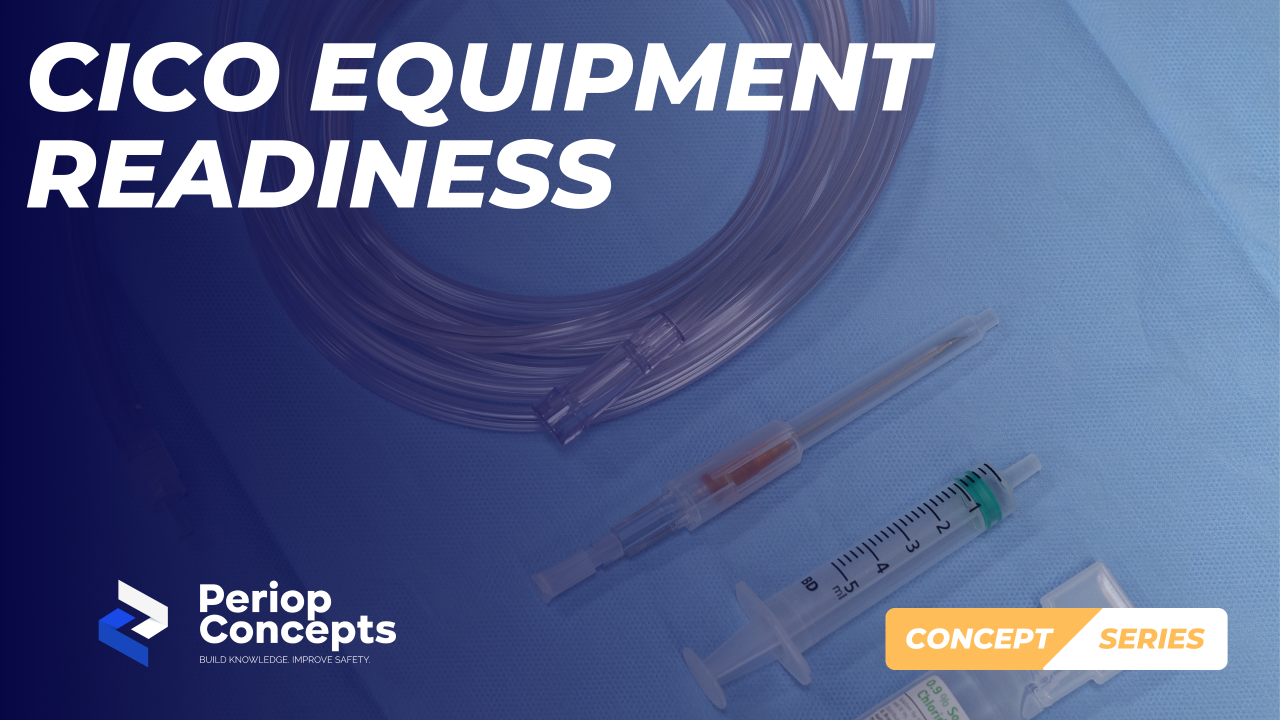
Can’t Intubate Can’t Oxygenate (CICO) is one of the most unforgiving airway emergencies a perianaesthesia nurse may face - it happens when all conventional methods of airway support fail and immediate Front-of-Neck Access (FONA) (e.g. emergency cricothyroidotomy) becomes necessary. CICO events are rare but high risk, and both human factors and equipment gaps have been repeatedly linked to poor outcomes in major airway audits.
Why equipment readiness matters
In the Fourth National Audit Project of the UK’s Royal College of Anaesthetists and Difficult Airway Society (NAP4), a significant contributor to airway-related harm was lack of appropriate equipment and delays in its use during crises. The report highlighted incidents where missing or unfamiliar gear, poor planning, and delayed mobilising of emergency airway equipment were associated with cardiac arrest, brain injury, or death.
What nurses need to check — and why
Before any anaesthetic or airway intervention:
• CICO/FONA kit location & contents — Ensure a designated, clearly labelled CICO pack is immediately accessible in all intubation locations. Kits should include appropriate scalpel and bougie/cannula tools for emergency cricothyroidotomy, syringes, oxygen insufflation devices, and connectors to deliver oxygen. Availability prevents time loss in critical minutes.
• Functionality & readiness — Check that syringes, connectors, cannulae, and any jet-oxygenation or insufflation devices are intact, patent, and within use dates. Equipment failure in a CICO crisis can directly lead to critical delays.
• Oxygen delivery setup — Confirm oxygen sources and tubing are present and correctly fitted to emergency airway devices. Inability to deliver oxygen despite successful FONA renders the airway intervention futile.
• Suction & visualization tools — Maintain functional suction at hand and ensure laryngoscopes/visualisation adjuncts are charged/ready. Clearing debris and confirming anatomy are essential even while preparing for FONA.
• Cognitive aids & checklists — Place cognitive prompts and checklists (including CICO steps) in visible, easily reachable spots. These support teams under stress and reduce task fixation on failed techniques instead of moving to the definitive rescue plan.
Integration with practice standards
Professional standards (including those published by the Australian and New Zealand College of Anaesthetists) endorse clearly defined crises protocols, accessible equipment, and team preparedness for airway emergencies. In practice this means pre-procedure checks of not just monitors and drugs, but also emergency airway gear and backup plans.
Clinical takeaway
Equipment readiness isn’t just about physical presence; it’s about functionality, accessibility, and team familiarity. Regular checks, consistent kit layout across areas, and mental rehearsal of CICO steps empower nurses to act swiftly when seconds count.
References
Cook, T.M., Woodall, N. and Frerk, C. (2011). Major complications of airway management in the United Kingdom: results of the Fourth National Audit Project of the Royal College of Anaesthetists and the Difficult Airway Society. British Journal of Anaesthesia, 106(5), 617–631.
Australian and New Zealand College of Anaesthetists. (2023). Standards of practice. https://www.anzca.edu.au/safety-and-advocacy/standards-of-practice
Stay connected with news and updates!
Join our mailing list to receive the latest news and updates from our team.
Don't worry, your information will not be shared.
We hate SPAM. We will never sell your information, for any reason.

