Cell Saver
Apr 28, 2025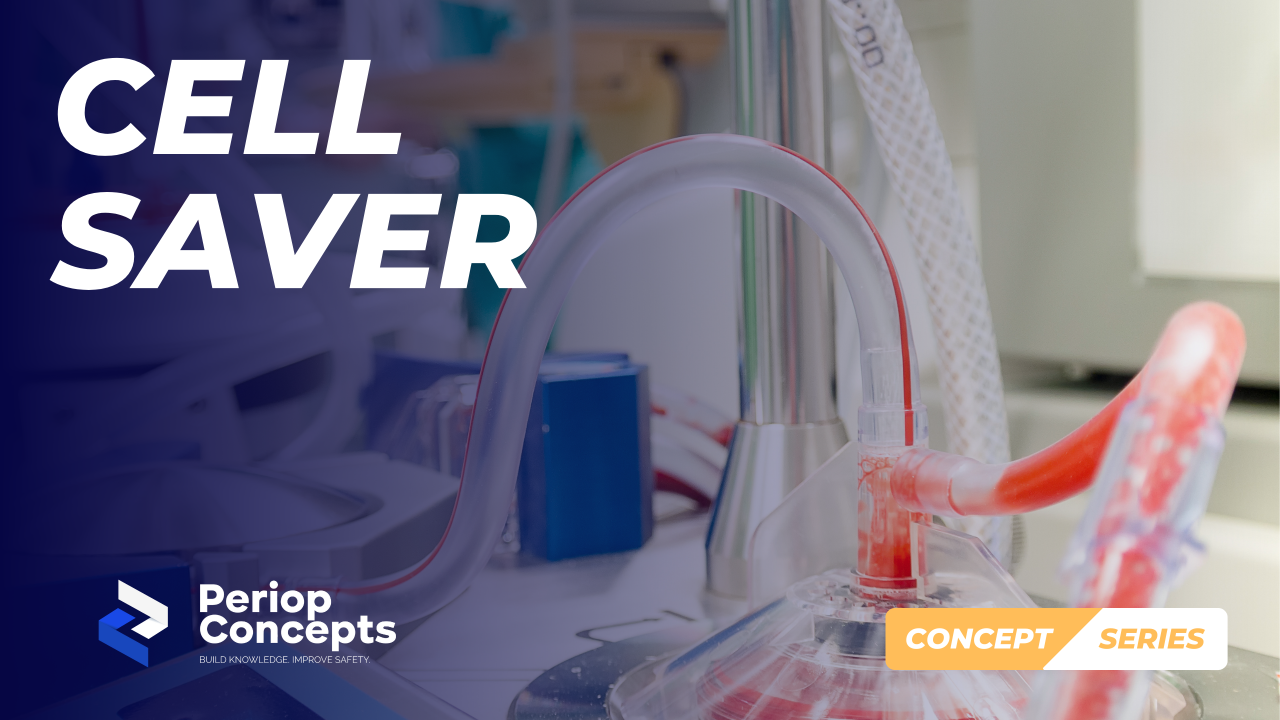
🧪🩸🔄 Can it be salvaged? Intraoperative cell salvage 💉🧬🧊
Cell salvage in its current form has been used in the perioperative environment since the 1960s 🕰️, and remains a critical strategy for blood management in the operating suite 🏥🛠️. During surgery, red cells can be harvested from the patient's own blood loss 💧, processed through a special machine 🧲 and then returned to the patient's own circulation via transfusion during, or immediately after surgery 🔁💉. So how does it work? 🤔
Blood loss from surgery can be collected by suction 💨, or from washing bloody surgical swabs 🩹🧻. Suctioning can cause damage to the red cell membranes 🧫, so many cell salvage machines have unique suction systems that alter the suction pressure to reduce damage 🛡️.
Once the blood is collected 🩸, it is combined with anticoagulant 🧪, filtered 🧼, and then is subject to high speed centrifugation 🌀, separating the different components 🧬. The separated red cells are collected and then washed in normal saline 💧 and prepared for re-infusion to the patient 🔄💉.
The other components, such as plasma proteins, anticoagulants, platelets and so on 🧪🩹, are considered waste products and are discarded 🚮.
The process of cell salvage is divided into three stages - collection, processing and reinfusion 📊.
Collection
Performed by the surgical team using specialised suction equipment 🛠️💨, with the aim of reclaiming as much blood loss as possible 💧 and avoiding contaminants or other cellular material such as bone fragments or tissue 🦴🧫.
Processing
Performed by appropriately trained staff 👨⚕️👩⚕️, and in many cases this is by a cell saver rep 🧑🔬. Processing involves isolating the red cells 🧬 and washing them 💧, preparing them for reinfusion 🔁.
Reinfusion
Should take place within 6 hours of the first collection ⏳, in order to protect the integrity of the red cells and optimise circulating volume 💓.
Advantages of cell salvage are the sparing of donor blood products 🩸🙅♂️, and a much safer transfusion process 🛡️ in that there are no restrictive features of transfusion associated with blood management principles as the patient is receiving their own blood products 🧬. Oxygen delivery from salvage blood products is also superior to donor blood 💨💉, and there are no adverse immunological effects 🚫🛑.
Disadvantages are that cell salvage is not appropriate for all operative blood loss scenarios ⚠️, and patients need to be selected on an individual basis 👤📋. Cell salvage requires specialised equipment 🛠️ and highly trained operators 👩🔧👨🔧, so is much more labour intensive than donor blood administration 💪. It also takes several minutes for blood to be processed ⌛, which may pose challenges in time critical massive haemorrhage scenarios 🚨💉.
Build Knowledge✅
Improve Safety✅
References:
Carroll, C., Young, F. (2021) Intraoperative cell salvage. BJA education. V 21(3) pp 95-101. DOI: 10.1016/j.bjae.2020.11.007
National blood authority (2024). Guidance for the provision of intraoperative cell salvage. NBA Australia. https://www.blood.gov.au/guidance-provision-intraoperative-cell-salvage
Stay connected with news and updates!
Join our mailing list to receive the latest news and updates from our team.
Don't worry, your information will not be shared.
We hate SPAM. We will never sell your information, for any reason.