A perioperative allergic reaction does not end when the patient stabilises. In many ways, that is where the next phase of care begins.
Without clear follow-up, the cause may remain unknown, leaving patients at risk during future procedures. For perianaesthesia nurses, closing the loop is an essential part of safe, ongoing care.
Perioperative anaphylaxis can involve multiple potential triggers such as antibiotics, neuromuscular blockers, or antiseptics. Identifying the culprit requires structured referral and specialised testing, often weeks after the event once immune markers have settled.
The immediate response is critical, but so is what happens next.
⚡ Accurate documentation of the reaction, timing, and suspected agents supports future investigation
⚡ Serum tryptase sampling at appropriate time points helps confirm anaphylaxis
⚡ Clear handover ensures the reaction is communicated beyond the perioperative team
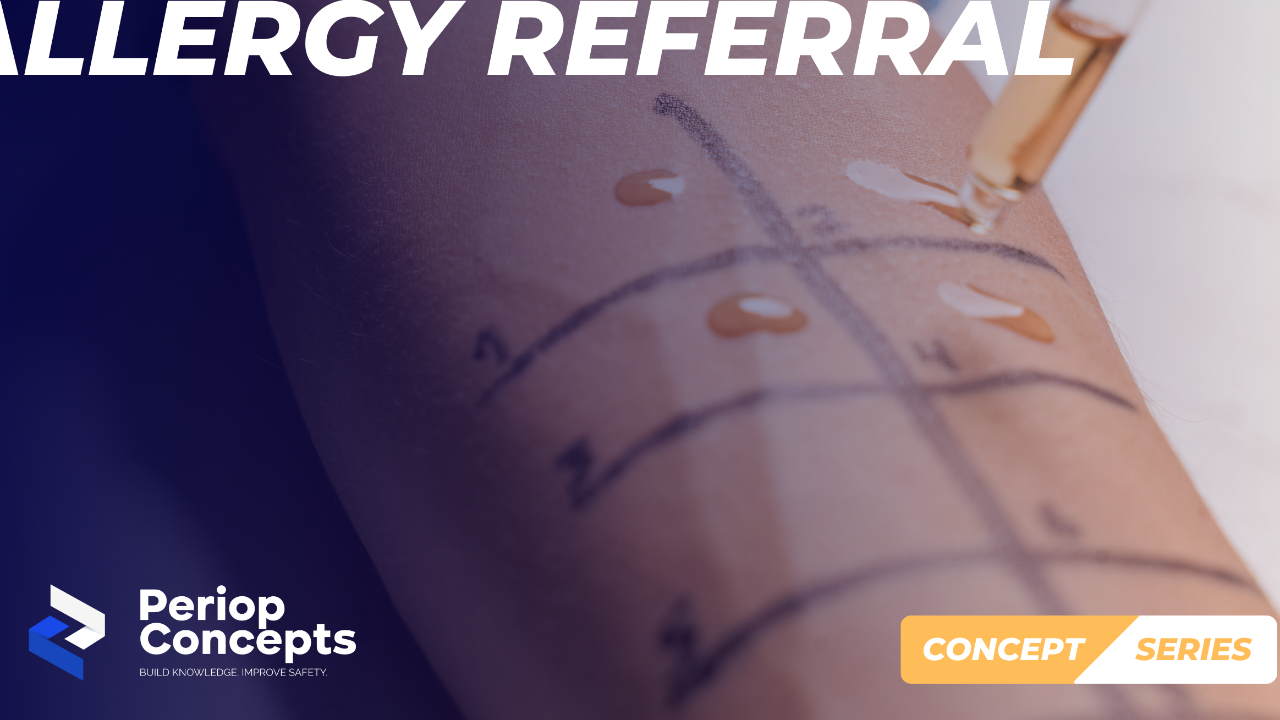
⚡ Referral to a specialist allergy service enables formal testing and diagnosis
⚡ Patients should be informed and provided with interim safety advice before discharge
Referral pathways are not just administrative. They are protective.
In practice, delays or incomplete referrals can lead to repeated exposure to the same trigger. Conversely, over-labelling without confirmation may unnecessarily restrict future care options.
For perianaesthesia nurses, this is where advocacy matters. Ensuring referrals are initiated, documentation is complete, and patients understand the importance of follow-up helps bridge the gap between acute care and long-term safety.
A well-managed reaction includes not only what happens in the moment, but what is carried forward.
Closing the loop ensures that future anaesthetics are safer, clearer, and more informed.
Build Knowledge ✅
Improve Safety ✅
References:
Australian and New Zealand College of Anaesthetists. (2022). Perioperative Anaphylaxis Management Guidelines.
Kolawole, H., Marshall, S.D., Crilly, H., Kerridge, R., Roessler, P. (2017). Perioperative anaphylaxis: diagnosis, investigation and management. Anaesthesia and Intensive Care.
Stay connected with news and updates!
Join our mailing list to receive the latest news and updates from our team.
Don't worry, your information will not be shared.
We hate SPAM. We will never sell your information, for any reason.

Unlock Exclusive Free Content
Join the mailing list. We give too much great content away for free, see what all the fuss is about.
Categories
All Categories abg acid base acidosis acorn adrenaline adrenaline dosing adrenaline in anaphylaxis advanced advancedhaemostats advancedpracticenursing adverse reaction aed agents ahpra ahpra audit airway airway adjuncts airway assessment airway emergency airway filter airway management airway mass airway rescue airway trauma airwaylifeline airwayoptimisation algorithm allergy allergy testing als als aftercare alsmedications amiodarone anaesthesia anaesthetic anaesthetic machine anaesthetics analgesia anaphylactoid anaphylaxis anaphylaxis aftercare anaphylaxis diagnosis anaphylaxis differential diagnosis anaphylaxis management anaphylaxis triggers anastamosis anatomy antibiotics antiemetic anzaag anzcor apnoea arrest arterial blood gas arterial line arterial line complications arterial line errors arterial lines arterialcannulation arteriallines asa article asl aspiration aspiration risk assessing pain assessment atypical anaphylaxis awareness bag mask ventilation behaviours of concern beta blockers biphasic anaphylaxis bis bispectral index blade bleed bleeding bleeding airway block blocks blood blood glucose blood pressure blood pressure monitoring blood products blood safety bluey boundaries breathing circuit bronchial blocker bronchoscopy bronchospasm burns calcium cannula technique cannulation capnography cardiac arrest cardiac collapse cardiac output cardiac surgery cardiovascular causesofcardiacarrest cell saver central venous catheter centralvenouscatheter cerebral oximetry checklist checklists chest tube chlorhexidine cico circadian cycle circuit classification climate climate change clinicaldecisionmaking clinicalpractice closed loop communication co2 coagulation coagulopathy cognitive aid cognitive load colonoscopy communication complications compression rates compressions contaminant coolinginmh core body temperature cpd cpr cricoid pressure cricothyrotomy crisis crisis resource management critical incident criticalbleeding cross matching cura cvc cvc complications dantrolene debriefing decisions defibrillation dental surgery depth of anaesthesia diabetes diagnostics differential diagnosis difficult airway documentation double lumen tube drug errors drug safety drugs ecg education educator emergence delirium emergency emergency management emotional intelligence end tidal carbon dioxide endoscopy endotracheal tubes ent entropy environment epidural anaesthesia equipment ercp ergonomics error ett exchange catheter exercise fasting fatigue feedback ffp fluid balance fluid resuscitation fluid therapy fona formal diagnosis fracture fixation principles fracture patterns frailty free flap ga gas gas analysis gastroscopy general anaesthetic gloves glp-1 ra glp-1 receptor agonists glp-1ras goals of care graded assertiveness haemodynamic haemoglobin haemorrhage haemostasis haemostatic haemostaticagents haemostats handle handover hazard health heart rate hemodynamics hereditarydisorder high flow high risk hot debrief human factors hypnosis hypoglycaemia hypotension hypothermia hypoxaemia hypoxia icu immune response incomplete reversal induction infection infection control inotrope inotropes intravenous intravenous cannulation intubation invasive blood pressure monitoring invasive device invasivebloodpressuremonitoring ischaemia time iv induction ketamine laryngeal mask laryngectomy laryngoscope laryngospasm last leadership learning lifelines lma local anaesthetic long term venous access major haemorrhage major surgery malignanthyperthermia mallampati mask ventilation massive transfusion massive transfusion protocol mast cells mean arterial pressure medications mh mhtesting microscope microsurgery mls monitoring movement muscle relaxants neck surgery nep nerve blocks nerve monitoring neuraxial neuroanaesthesia neuromonitoring neuromuscular blockade neuromuscular junction neurophysiology neurosurgery neurosurgerynursing neurovascularcare neurovascularsurgery nmt non-invasive blood pressure non-shockable rhythms nurse burnout nurse education nurse wellbeing nurselife nursing nursingeducation nutrition obstetric obstetrics anaesthesia obstruction one lung ventilation operatingroom operatingroomnursing opioid opioids orthopaedic biology orthopaedic nursing ot oxygen oxygenation ozempic pacu paediatric paediatric anaesthesia paediatric t piece paediatrics pain pain management partnership passive patient positioning patient safety patientbloodmanagement patientsafety perianaesthesia nurse educator perioperative perioperative orthopaedics perioperativeeducation perioperativenurse perioperativenursing physiology pipeline plastic surgery platelets ponv positioning post op bleed post operative postoperative care pregnancy preoperative preoperative care preoxygenation preparedness primary survey professional development protocol psychological safety publications pulmonary radiation rapid sequence induction recognition recovery recovery issues recovery room emeregencies refractory anaphyalxis refractory hypotension regional analgesia regional block regionalanaesthesia renal resilience resources respiratory resuscitation reversal rotem safe apnoea time safety scalpel scalpel technique scoutnurse scrub scout nursing scrubnurse scrubscoutconcepts secondary survey sedation seldinger shared airway shock shockable rhythms signs of anaphylaxis simulation skin prick testing sleep specialty anaesthesia spinal spinal anaesthetic sterile procedures stress stress reduction surgery surgical surgical considerations surgical safety checklist surgicalcare surgicalphysiology surgicalpractice surgicalsafety surgicalteamwork surgicaltechniques systemic tachycardia teaching styles team time-out teamwork techniques teg temperature testing therapies thoracic anaesthesia thoracic recovery care thoracotomy tonsillectomy topical topicalhaemostats tracheostomy training tranexamic acid transfusion transfusion reaction trauma treatment tryptase ultrasound ultrasoundprobes under water seal drain vascular surgery vasopressor vats ventilation vf videolaryngoscope volatileagents vortex approach vt waste wellbeing whole blood workshop